
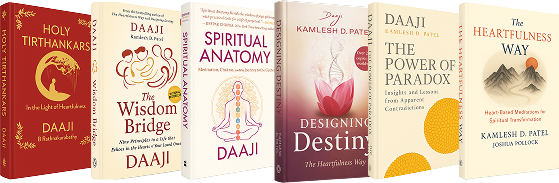
Discover Daaji's books through preview excerpts, author videos, reader testimonials, and convenient purchase options.
Pepperwood's mission is to inspire conservation through science. Help our natural places flourish today, tomorrow, and long into the future with a tax-deductible gift. Your gift strengthens the health of Northern California's land, water, and wildlife, securing a healthy future for all!
Read more
We are not saying that you leave your home or abandon your responsibilities. You don’t need to become Mirabai, leaving your Ranaji. Instead, you can stay with your Ranaji and help him evolve. Meditate together and make it a shared journey. Finding Joy in Meditation Think about offering a child their favorite treat, like ice cream. They would jump at the chance without needing willpower to finish it. Similarly, when you cherish something, like meditation, you will do it without hesitation. The love and interest in meditation are crucial. When you have a keen desire and restlessness, or "tadap," to achieve the highest, nothing can stop you. Balancing Material and Spiritual Life It's essential to balance your material life (bhautik jeevan) with spirituality(adhyatmikta). Both aspects should go hand in hand, with no excess in either direction. You should not delve so deeply into spirituality that your work life suffers, nor should you immerse yourself in work to the detriment of your spiritual practices. These tips for meditation at home can help maintain this balance. The Two Wings of a Bird Babuji Maharaj, a revered guru, often compared spirituality and material life to the two wings of a bird. A bird cannot fly with one wing; if one wing is longer, the bird will go in circles. This circling, known as Kalachakra or the cycle of life and death, signifies an imbalance. Achieving balance between the spiritual and material aspects of life allows you to rise straight up, symbolizing spiritual evolution. Practical Steps to Make Meditation a Daily Habit 1. Start Small: Begin with a few minutes of meditation each day and gradually increase the duration as you become more comfortable. This is one of the best meditation tips for beginners. 2. Set a Routine: Establish a specific time for meditation, preferably in the morning or evening, to create a habit. 3. Find a Comfortable Space: Choose a quiet and comfortable place where you can meditate without interruptions. 4. Meditate Together: Encourage your family members or partner to meditate with you, fostering a shared spiritual practice. 5. Balance Your Life: Ensure that both your work and spiritual practices are balanced, avoiding excess in either area. 6. Stay Motivated: Keep your interest and love for meditation alive by exploring different techniques and learning from experienced practitioners.
Read more
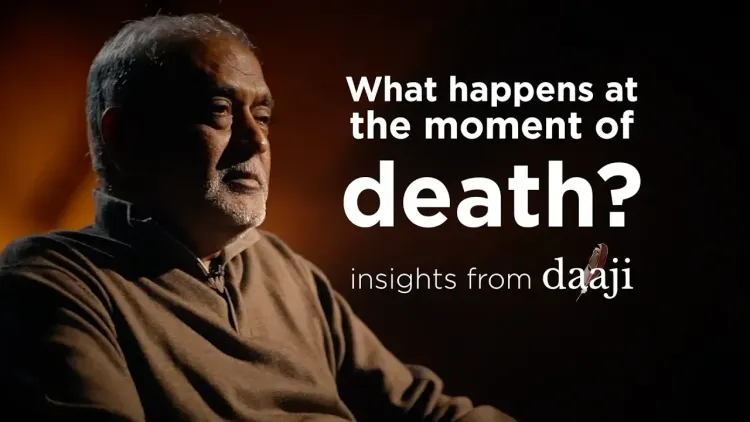
Aren’t we all fascinated by this question: what happens after death? What becomes of me? Don’t we ponder also: what was I before I was born? So somewhere I must have died in the past. So when I die now I’ll become someone, something. And this circle goes on and on and on. Unless of course, this new mechanism which yogis have invented from their experiences – they have claimed that there is a state of liberation or moksha. What happens to an individual soul that is liberated? Does it mean that he will not be incarnated again? Not really. True liberation is where you have total freedom, absolute freedom of being born again or not. You may choose to be born or you may choose not to be born again. Time is a big thing. In the Gita, Lord Krishna says, “kalo’smi,” meaning “I am time.” Time creates and time alone kills. This is the inevitable law of time. What happens at the moment of death? It’s worth exploring. When death is about to come, first of all the element of Earth is withdrawn from the Base Plexus. We call this Plexus the Mooladhara Chakra. Once this earth element is withdrawn from Mooladhara Chakra, it moves up to the Swadisthana Chakra or Hypogastric Plexus. This is the place of the Water element. The Earth element is then converted into Water. The hands and feet become cold. Haven’t you felt this when someone is dying? You’ll notice that their hands and feet will suddenly become cold. This is the dissolution of Water. Then, when Water is withdrawn from the Hypogastric Plexus or Swadisthana Chakra, it is accumulated here at the Solar Plexus, at the region of the navel or Nabhi Chakra. It then becomes Fire. In the region above the navel, it will become warmer. This is the dissolution of Fire. Then the Fire is gradually withdrawn and moves upward to the Cardiac Plexus or Anahataor Hridaya Chakra, where it mixes with the Air of the Heart Region. The whole body begins to tremble. This is the dissolution of the Air element. After that, the Air of the Cardiac Plexus is withdrawn to the Ether element, and it somehow dissolves the Ether element, which is present at Kantha Chakra or Pharyngeal Plexus. There, a sound is produced at this Vishuddhi Chakra. Once this sound is produced, what happens? The soul takes an exit either through the eyes, or through the ears, or through mouth. The eyes are turned backward. Now the element of Brahm, which is found in the individual soul, is also withdrawn. It is at this point precisely that the eyes turn back and now they merge in the Virat element. If the soul is liberated, then mixing with the Virat element becomes possible after exiting from Brahmarandhra, which is from the back of the head. Generally, you must have seen elderly people in bygone dayswho used to keep a choti or ponytail on the back. Exactly there this Brahmarandhra is. Liberated souls exit from this particular point. Unfortunately, tradition holds onto this idea so strongly that even after death, even when the body is totally burnt, when some parts of the skull remain, they will smash it. They smash it in such a way that the soul gets to leave from this 12th or Brahmarandhra Chakra. But this is inhuman. This is violent. A liberated soul doesn’t need such a blow from a heavy instrument. It just evaporates. It just transcends automatically at the very moment of death and mixes or merges with the Virat element. So this, in brief, is what really happens at the moment of death. Depending on the vibratory level of our atman;if it is sattvik, there too there is a whole spectrum of sattvikta. If it is tamasic, there is a whole spectrum of tamasicta. And if it is rajasic, there is also a spectrum. To what extent is it tamasic or rajasic or sattvik? Taking a combination of it all, there are infinite possibilities and, accordingly, there are infinite dimensions. Based on the vibratory level of the soul, it will reach out to that dimension which is compatible to that vibration. Nowhere else will it go. The whole process is reversed when we incarnate. The next topic we will talk about is reincarnation, how we are conceived and how the soul comes into picture. Thank you for listening on death.
Read more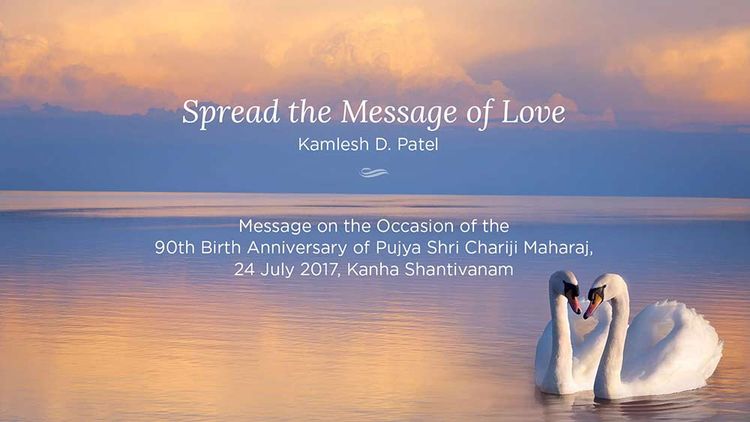
Message on the Occasion of the 90th Birth Anniversary of Pujya Shri Chariji Maharaj, 24 July 2017, Kanha Shantivanam We regularly witness how flocks of birds feed, move and journey together, and how those of the same kind assemble together. Our assembly is likewise. We aspire to soar majestically towards the Unknown with wings outstretched. In the language of Yoga, the cycle of samsara culminates in the hansa or the transcendent swan state: the swan that separates milk from water! Yet this discrimination or viveka, highly praised as the first step in Sadhana Chatusthaya, still eludes us. A common bond unites us here. May this bond foster mutual trust and respect, and hasten the future forward into this very moment, so that we see our united enterprise achieved in utter harmony and in the service of one another in simple anonymity. Some of us are nonetheless tormented by a continuous preoccupation with the feeling of ‘lack’ in life. This preoccupation, or constant craving to fulfil that lack, results in a chronic predicament of enough-lessness or incompleteness. We are fixated on that lack until it is fulfilled, and when it is we dig up another lack. Our habitual awareness of an unfulfilled state within us stirs an activity within the mind that affects the brain’s neural network. It is well known that neurons that fire together wire together. Per contra, those neurons that do not work together risk losing their links within the neural network; they must be retrained to connect to the network. Ceaseless brooding over any lack or any excess in our lives creates a pattern in our minds, and subsequently a neural network that supports the brooding mind. If the pattern triggers fear and worry, surely the neural network will adapt to boost the fear and worry. The mind impacts the brain, and thereafter the brain impacts the mind. Meanwhile, life seems to speedily move on when we are preoccupied with detecting what we lack and finding ways to fulfil it! How to overcome this pattern that hurts us? A gentle nudge that deflects the habit of brooding helps us to avoid the valleys of fear and worry. During any ideal meditation are we not successfully deflecting unwanted thoughts, by reminding ourselves of what truly matters? This awareness – at any given moment of what truly matters – can save us from deep troubles, including the ceaseless brooding that may make us bitter towards life. Here’s what you can do. Cultivate and steadfastly implement a routine of daily meditations, weekly group satsanghs, and weekly individual sittings. Establish a biological rhythm that trains the mind and the brain to establish specific neural pathways that support our noble effort in evolving. Allow the spiritual condition to percolate deeply to firm up those pathways. Dedicating such effort to the Divine will only intensify the pathways. By now we know well the significance of meditation before sunrise, cleaning before sunset and prayer at bedtime. We do have a choice to tap into our limitless inner resource where stillness, peace and contentment flourish – a treasure of unparalleled riches and supreme strength. Focusing on this treasure will only fortify our resolve; but staying away from it can weaken our resolve to continuously improve. Often when it is ideal and most necessary to reconnect with our Beloved Master we deviate from that awareness. Such deviation, even for a few seconds, can drastically change our inner environment. How to prevent this deviation? By micromanaging with micro-meditations. Meditating even for a few seconds during our daily rush can prepare us to regain our meditative state at a moment’s notice. In no time we can cultivate the meditative state if we remain even a bit vigilant. Is it mental gymnastics we are learning? No! In fact, we progress naturally and joyously towards the Source within us. By cultivating the attitude of relying on the supreme strength inside us, we create superior neural networking that surpasses the networking of a mind focused on what we lack. What then is needed from our side to facilitate this joyful journey? A heartfelt desire that, “I must go on continuously improving myself,” and to recognise that a simple practice such as ours cannot be ignored. Once we sense the inner stillness, the next evolutionary step will unfold naturally. Constant remembrance, the art of building a bridge between my Maker and myself, is a result of well-finished meditation. Pushing oneself to ‘think’ of the bestower of spiritual conditions is not the same as ‘remembrance’. Remembering the Beloved is never a torture, while thinking can become a torture. In fact, it may give us a headache. Instead let the remembrance of the Beloved be a natural outcome of our passionate practice of Sahaj Marg. Our way is very simple, its naturalness extraordinary, and to become natural ourselves is a sure outcome. Gently, steadfastly, in utmost care, and in loving remembrance, let us tread on this sacred path that the Great Hierarchy treads ahead of us. Like birds of a feather, as seekers of Reality, let us make this way of life our primary focus. Let us carry this message out to the world and allow it to permeate our lives. Let us keep flocking together as swans and, soaring high, spread the message of love in a majestic way. On this most divine of days, let us catch up with our Beloved Master. Kamlesh D. Patel CONTINUE READING Download - Hindi version Download - Telugu Version
Read more
Kamlesh D. Patel shares some thoughts on how marriage ennobles and enriches our lives, supports our evolution and provides a happy, stable base for family life. The other day, I was lucky enough to observe an elderly couple taking a stroll along the river in Princeton, their steps totally in sync. You could see they had been together a long time. They hardly spoke, communicating their togetherness in more subtle ways. Eventually they reached a park bench overlooking the river, pulled out a flask of tea and some sandwiches, and together enjoyed their little feast in perfect silence. Their movements were so in tune it seemed for a moment like one person was moving. The way she poured the tea was full of gentleness and care, as was the way he received the cup. They ate their sandwiches and enjoyed the stillness of the riverside. They had reached a stage in their marriage of purity in connection and communion. Did this happen as a result of a life full of perfect harmony and ease? I doubt it. Did they have arguments about how to discipline their children, and how much money was spent last month? Probably. Most couples evolve to this stage in their relationship by going through struggles and difficulties, by sacrificing their personal wishes, and by raising children, grandchildren and sometimes great grandchildren. This is the other end of the spectrum from the heady days of the young love of newly-weds, when a couple is much more physical and verbal in their demonstration of love. That is, if there is love in the relationship. We will get to that later on. So which one is better – the exciting early days of romance, or the halcyon days of an elderly couple? This seems like a silly question, given that it is obvious they are different stages in the evolution of a marriage, both relevant and both important. It would be a silly question, except for the fact that today most marriages in the West, and an increasing number in the East, do not last the distance! It is worth examining why. What comes between the beginning and the end? Why is it that in today’s world so many marriages end in divorce? Is it because marriage is an outdated institution? I would say “No,” it is because we do not understand the purpose and stages of marriages, and the nature of love. It is easy to see how problems happen. The daily grind of modern life is not kind to relationships. Often both parents work long hours in order to save enough money to pay for their children’s education and buy a house, and city dwellers are bombarded by all sorts of environmental pollution and stress. So by the end of a hectic day, there is little energy left to take care of each other and be kind. But do you think this is any harder than living with war, famine, plagues or slavery – all situations that existed for our ancestors? We can easily blame circumstances for the failing marriages of today, but in many ways human beings have never had it easier. It is also that after the joyous whirlwind of a wedding, there comes the reality of living together, accepting each other’s imperfections and learning how to adjust to the new dynamics of a relationship. When two imperfect beings come together, there is bound to be some friction and adjustment. And if the couple lives with extended family, there are even more components in the new dynamic. It is often not at the beginning or the end that marriages falter, but in the middle when the struggles are greatest. So what makes the difference between a couple that is able to stay with the evolutionary process of marriage and one that does not? As more and more youngsters look for answers to such questions, where reason and emotions converge, where tradition and contemporary thinking meet, and perhaps, where science and spirituality meet, there is a need for a very relevant and practical approach to relationships that also encompasses the wisdom of the ages. So let’s start with some ancient wisdom that can help. In Yogic philosophy, we learn about the 3 human types: sattvik, rajasic and tamasic. We are all a mixture of the three, but generally one predominates in our make up, and this can change as we evolve. Tamasic behavior is characterized by ignorance and inertia. A tamasic person is often lethargic, prone to violence, and mistrust. Rajasic behavior is characterized by action and passion. A rajasic person is one who is often focused on satisfying his own personal desires, gain and prosperity. Sattvik behavior is characterized by purity and wisdom. A sattvik person cheerfully serves others without any expectation of personal benefit. These three qualities pervade everything we do – the way we walk, talk and eat, and even the way we breathe! What happens to our breath when we experience intense anger? The nostrils flare and our breath is long, loud and chaotic; tamasic in nature. On the other hand, when we are in the state of samadhi or deep meditation, our breathing is so quiet and calm that we hardly notice it. It flows so naturally and so effortlessly, which is sattvik in nature. These qualities play out in all our interactions with others, and are very evident in our closest relationships. As a result, marriages are also associated with one of these three types. A tamasic marriage is based on individual gain. The couple is coming together for benefit. For example, the groom might be focused solely on the financial status of the bride’s family, or gaining a trophy wife. Alternatively, the bride might be marrying someone much older for money, status or access to an easy visa. Such marriages are transactional in nature, based on narcissistic or self-centered behavior, and can easily result in mutual distrust and discord. A spouse is a commodity to provide status, pleasure or service. Today, many marriages are rajasic, based on mutual love and respect, and also mutual desire and benefit. But although there may be mutual respect, the love is not totally pure and unconditional, as there is expectation. So when the other person is flawed and imperfect, as we all are, there is disappointment and trouble in paradise. A sattvik relationship is one in which the two partners don’t think of themselves as individuals, but as one. They cheerfully sacrifice everything for the relationship and each other. There is a wonderful short story by O. Henry called ‘The Gift of the Magi’ about such a young couple. In a sattvik marriage there is purity of intent, and no concern about physical deficiencies or financial status. Communion, mutual growth and unconditional love are at the core of the marriage. In sattvik marriages, the best emerges over a period of time, as the family is based on giving and love, and so it is strong. When children come along in a marriage, the focus in the couple shifts from attention on each other to a partnership where the main focus of attention is now on the children. The different personality types will respond in different ways to such a shift. What do you imagine will happen to a person who is self-focused, who wants his or her spouse to constantly shower attention? And what will happen to a person who is always happy to give and does not need to be the center of attention? Here is an example of different responses leading to different results. You can consider many other scenarios – financial hardship, ill-health, problems with children, death in the family, worries at work, etc. How will each personality type respond when such struggles come in a marriage? There always needs to be at least one giver for a marriage to work, and if there are two it can thrive. So in today’s world, where narcissism and self-interest are encouraged and promoted by advertising and the media, it is not surprising that so many marriages fail or exist in suffering rather than joy. When we are intent on blaming and criticizing the other person for problems, rather than looking to ourselves and accepting difficulties, nothing can move forward. We have become a ‘me’ rather than a ‘we’ culture. But this is exactly why the institution of marriage brings so much hope for the future. Let’s go back to our elderly couple in Princeton. Did they start out married life in this sattvik state together? Not necessarily. Life together, over the years, brings about a shared evolution. The rough edges are made smooth, acceptance blossoms over time, and both learn from each other how to be in harmony and stillness. That is, as long as they are both willing to stay together through all the ups and downs of married life. Marriage and family life teach us to become more and more giving, if we are willing to commit to the journey. There is a traditional French tale, Beauty and the Beast, in which the Beast starts out very tamasic, imprisons the beautiful Belle and locks her away as a prize. But over time the kindness, love and acceptance of Belle transforms him into a handsome, gentle prince. We love these folk tales for the very reason that they kindle something in our unconscious mind that we know is possible. This is the possibility marriage brings to all of us – the opportunity to grow, refine ourselves and learn to love. Through marriage we can evolve into that sattvik state of communion I saw that day in the elderly couple by the river – so subtle, gentle and full of naturalness. I hope that more of us will have the opportunity to experience such a state. That is why in 21st century Yoga, family life is venerated far more than the celibate life of a monk. It is through the love and sacrifice, the struggles and acceptance, and the willingness to grow that marriage offers that we refine ourselves enough to realize our fullest potential as human beings. DOWNLOAD PDF Download - Russian Version
Read more
Message, 28th September 2016, New York, USA I would like to draw your attention to certain trees. There are trees that grow tall, sturdy and strong, like mahogany, oak and acacia: you cannot cut them easily. Compare them to chikoo and mango, which are very tender and their wood is not strong, yet they yield the most beautiful fruits. In nature, this tenderness is required to bring about sweetness in life. The sturdier trees with hard wood do not have praiseworthy fruits. Observe the mighty and tall standing trees falling in the wake of a tornado, but see the humble blade of grass! It is the softness of the heart that makes it droop with reverence, and humility has a chance to sing the songs of sweetness! What can a bitter and arrogant heart sing? It can only hurt others. At the human level, look at men and women. Study our scenario. Women are more loving and tender. It is love that makes them tender. It is arrogance and ego that makes us harsh. What do our sisters yield? They keep humanity and the race alive through their tenderness and love; come what may, they go through it all with tolerance and acceptance. It is that inherent nature given by God that is bestowed lavishly on them. If we have this love, tenderness, softness and suppleness in our heart, we can become so creative. We will be able to propagate humanity to a different level, which Pujya Shri Babuji calls “The new human race in the offing.” How? By educating ourselves through intense practice with a lot of love, a lot of dedication and a lot of passion. Even when no one is around us, let the heart remain imbued with love, remain absorbed in love. Think of a beautiful rose flower that remains drenched with its own nectar, its very own fragrance, its very nature which fills the air. Without this fragrance, a rose is no rose. Without love in the heart, we humans have to struggle to become true human beings. Despite having some love in the heart, we make the mistakes of investing this love in smaller projects, in smaller circles, restricted often within a narrow range, and we miss out on the broader scheme of making it universal. So the flow of the river of love remains stagnant in our backyard. Let us ensure that this river of love reaches the Ocean. One quality stands out par excellence in this respect: humility in our interactions with others. Humility is like a vacuum; it creates a spiritual vacuum in us. Only then are we able to imbibe transmission. If we say we are perfect, the vacuum is already full and nothing else can fill it up, so Grace will never descend. It will be like an inverted pot; Grace will fall on the pot, no doubt, but it will never be absorbed. In order for that pot to be empty and receive, in order for our heart to remain empty and receive, we must have humility. Humility will attract Grace from the Master. In his message from the Brighter World on Tuesday, 5th March 2002, Pujya Shri Babuji says, “The humblest creature, the most self-effacing one, can lead a richer life than a king.” Let us also revisit the message from Pujya Shri Babuji given on 30th April 1982 at Surat: “… If we consider ourselves great, we put up a wall to that Greatness where we have to arrive. We create bondage, so to say, that becomes an obstruction on the path. What’s the harm! When we assume greatness, we start considering others as low (insignificant). Now that path which we have to trudge, also gets closed; and we are wholly lost to all intents and purposes. Somebody takes it in his mind that he excels someone else in some particular way. That assumes various forms, and we strengthen egoism for nothing, without getting anything in return. We blow our own trumpet in our own thoughts, and lose a lot in the process. …” We all have our individuality for which we are grateful to the Lord. But to remain egoistic is akin to insulting ourselves and, ultimately, God. When love shines supreme in the meditating heart, whatsoever it may touch is alchemized. Inwardly remaining meditative and externally remaining focused on our mundane work, our inner loving state transforms the very nature of work we are attempting to perform. Even so-called emotional toxins are transformed when we are meditative. Greater understanding develops that can transform the vishayas, the toxins, into nectar. Heart becomes like a prism, through which anything that passes becomes nectar. Instead of responding to revenge with revenge, or anger with anger, imagine the very instinctual nature responding to such revenge and anger with compassion and love. Imagine if we prick a cat’s tail, and instead of pouncing that very cat starts to display a different response, one of indifference or a happy miaow! We would be surprised to see such a cat! We can try to transform ourselves so as to become instinctively responsive with love and a smile, or with a little joke, instead of responding with sarcasm and insults. No doubt, the energy arising out of anger is unique, and anger cannot be destroyed, as Pujya Shri Babuji puts it. But surely the energy can be transformed into compassion if we only allow a few seconds of pause, and reflect and apply understanding with wisdom. So here, instead of instinctively responding with anger, in a state of love instinctively the response is coloured with compassion. Is this not evolution? Is it too much of a challenge for the meditative mind to arrive at such a sublime state? Don’t you think that if we wish that, “Yes, I would like that to happen,” our beloved Master Chariji will help us achieve that? When he is there to support us, why do we think twice? Will he just remain a silent witness to our struggles to improve? What I have understood from our beloved Master’s talks, which were released in the book Love and Death, is as follows. To me this is the essence of the whole series of talks: To love is to efface oneself from the glitch of ego. The lower self must be effaced, so in a way it is one kind of annihilation. Friendship must ripen into love, love must ripen into adoration, adoration into worship, worship into surrender and then the extinction of the self, the death of the little ‘me’. Truly, when we love, we seek only the Beloved, we think only of the Beloved. Only the Beloved exists, we don’t. It is love that ennobles this bond. Love is all about giving and giving. It is never about taking. When this love dissolves into another, another likewise dissolves into the lover. Both are dissolving into each other. This is the ideal relationship with the Lord. He, our Lord, is always loyal. We have to make ourselves loyal and worthy. The entire preparation or the journey is only towards this, to become worthy of His love.
Read more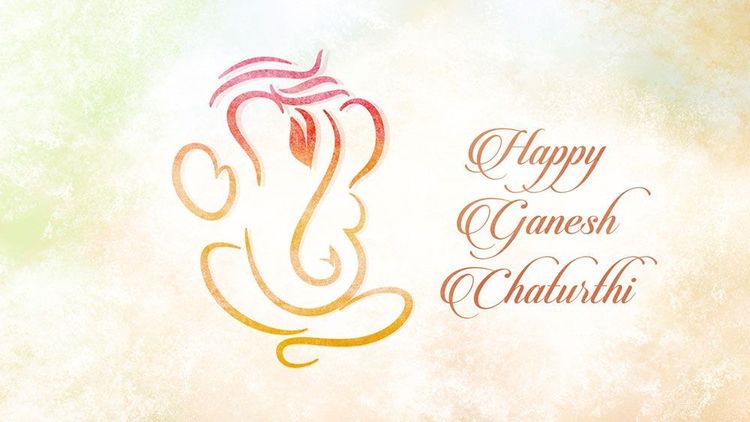
Dear Friends, Warm wishes to you all on this happy and auspicious occasion when Hindus celebrate the birthday of Lord Ganesha. But we neither need to be Hindu nor religious to appreciate the story of his wonderful life and what he represents. In Hindu homes, this festival is usually filled with immense joy. There is often a retelling of the story of Lord Ganesha, as well as special food, decorations, music and offerings. For children, Ganesha is a magical, mythological being, and parents often refer to him and his life to teach values, such as “Having such large ears and a small mouth means you should listen more and talk less.” There are also some very beautiful and profound spiritual messages we can learn from Ganesha that are universal in their appeal. When you look at Ganesha, all you feel is joy and happiness. Whether you are religious or not, it is a natural response to smile when you see his image. That is the first message of Ganesh: be joyful, as after all only joy attracts Grace. You feel that joy radiating from him. What else does he represent? He has an animal face, a human body and a divine function. Isn’t that the journey of spirituality, where we evolve from animal to human to divine in our nature? The sophisticated Murthi of Lord Ganesha is like three-dimensional infographics, detailing the spiritual journey and beyond, starting from the animal level of existence to a state beyond anandam or bliss! How to portray a state beyond bliss, where the very individual is no longer there in the form of consciousness to interact with non-bliss? We have animalistic, instinctive tendencies that are associated with living in a physical body as part of the animal kingdom. Through developing our capacities to love, accept, understand and forgive, we become human, transcending the baser tendencies. As the journey continues, our existence slowly becomes divinized, so that we transcend even our humanness so that we can merge with the Ultimate. In that state, the animal, human and divine are integrated in the form of a divinized being. Ganesha symbolizes this journey; he represents the possibility that exists for all of us. Now comes the mouse! Why should a big guy like Ganesha be riding a tiny country mouse? Here he is teaching us one of the most important principles of an evolutionary life. Our spiritual journey is all about the expansion of our consciousness, and this requires the refinement of our subtle bodies. One of the four main subtle bodies is our ego, ahankar. As our ego is refined, the qualities of humility, innocence, simplicity and purity shine out in our behavior, as we are able to externalize the subtlest spiritual conditions. Ganesha shows us this so beautifully and simply: we need to make our ego so light that even a mouse can carry us! He represents that carefree, joyful state of surrender, where the ego is light and utilized for universal, divine purpose. So we have joy, happiness, integration of animal, human and divine, and the mouse: the lightness of a pure and humble ego. What a combination! No wonder Ganesha is loved by all. Instead of just loving him, let’s try to become like him. All the best, Daaji Download full article
Read more
Through the ages, so much has been written about the spiritual seeker – ranging from yoga journals and self help books to religious scriptures and deep and insightful literature from legendary philosophers. The seeker’s journey has been charted out and explained in great detail. Guidance from various sources is available to those who are looking for enlightenment, or simply a better way to live their life. Seekers sometimes undertake long, arduous journeys from all corners of the world to find spiritual guidance and wisdom. There are organizations dedicated to the cause of helping spiritual seekers, which offer countless practices and approaches for achieving the goal of life. We are all seekers of the ultimate truth, investing considerable energy into learning how to refine our process of seeking. What if the tables were turned and God, or the Ultimate, or the Source, is actually seeking us? Imagine for a moment that we don’t have to go anywhere, or to do anything except simply sit wherever we are, and allow ourselves to be found? Imagine that heavens are waiting to enter our heart, right here and now! What a powerful concept! How do we make this a reality and allow ourselves to be found? How do we create such a state where the higher presence naturally settles within our hearts? The answer possibly lies in cultivating the seeds of contentment within our hearts. We will come back to this idea, but to understand its significance, let us contemplate the type of environment that would attract the Ultimate. Think of the innocence of small children who content themselves with their toys and games, with the implicit confidence that their parents are taking care of all their basic needs. Food, shelter, clothing, education and even entertainment – in whatever form these are available – are blissfully taken for granted by children till a certain stage is reached. One can say children enjoy a state of ‘independence in dependency’! A child’s heart is free from any burdens – it is simple and pure. Innocence is its natural condition, making such a heart an ideal abode for the divine. What happens as we grow older? As young adults, we start seeking our own version of life. Actually, the first part, the youthful days of life are spent mostly in pursuit of pleasure, satisfying the senses and building our intellect. The ego develops and we transition into a state of ‘dependent freedom’ – we like to make our own choices and think we are free but our happiness depends on so many external factors. We become proud of our accomplishments and tie our happiness to them. As we proceed through life, in most cases, this progresses further into a state of complete bondage internally and externally. We become slaves of our desires and are bound by external conditions, while breeding discontent and frustration internally. Even in old age, though there is apparent wisdom backed by life’s experiences, we often find people pining for their prime years that have passed, or expecting a glorious afterlife based on the suffering they are going through. The desires have not left, but have merely transformed from pleasure-oriented desires in youth to ego-satisfying desires as we age: the desire for praise, recognition, fame, a legacy to leave behind, and so on. It's a complex gamut of existence where desires run underneath when the body cannot cooperate, and on top of that the legacy of fulfilment! Often it is a regretful situation where one has spent the whole life waiting for such an old age in anticipation of devoting life for the fulfilment of the higher purpose. Where has the state of innocence gone? If a state of innocence and a desire-free heart are the ideal abode for God, it would seem that our early childhood is our best chance of experiencing this! Perhaps this is actually the case, and the higher presence does dwell in the innocent hearts of children, only to be hidden or refused an abode as a person grows more complex and grosser. Consider this situation of a warm, comfortable, familiar home changing into a uninviting, foreboding place with strange, fearful characters. Would you like to stay in such a place? Would the Lord like to reside in a heart that is pulled in different directions by various desires, which contains the thorns of pride and jealousy, and has become a warehouse of complex emotions? This is why a sad, discontent or angry heart deflects sublime grace, to the extent that we are unable to believe that God is seeking us! How do we restore the innocence and purity of our childhood, when life inevitably draws us into situations that demand difficult choices, competition for survival and self-preservation? How do we cultivate the seeds of contentment in our heart, which flower into a state of desire-free innocence and purity? It starts with a simple suggestion that everything we need is already present within us. All the love of the world, the beauty of life, the seed of perfection is present in our heart represented as a source of light. This suggestion is strengthened through actual experience in meditation, as the idea of light leads to a feeling of an inner presence. This inner presence becomes a reality as our consciousness expands, and we become aware of a wholeness of being. When we begin to experience this state of wholeness and perfection at our core, the clouds of discontent and ignorance start to dissolve. The heart regains its light and innocent nature. Under such circumstances, the egoless heart, the humble heart, automatically draws the heavens towards itself. Such a heart is perfectly adjusted to its external circumstances. It creates heaven around itself.
Read more